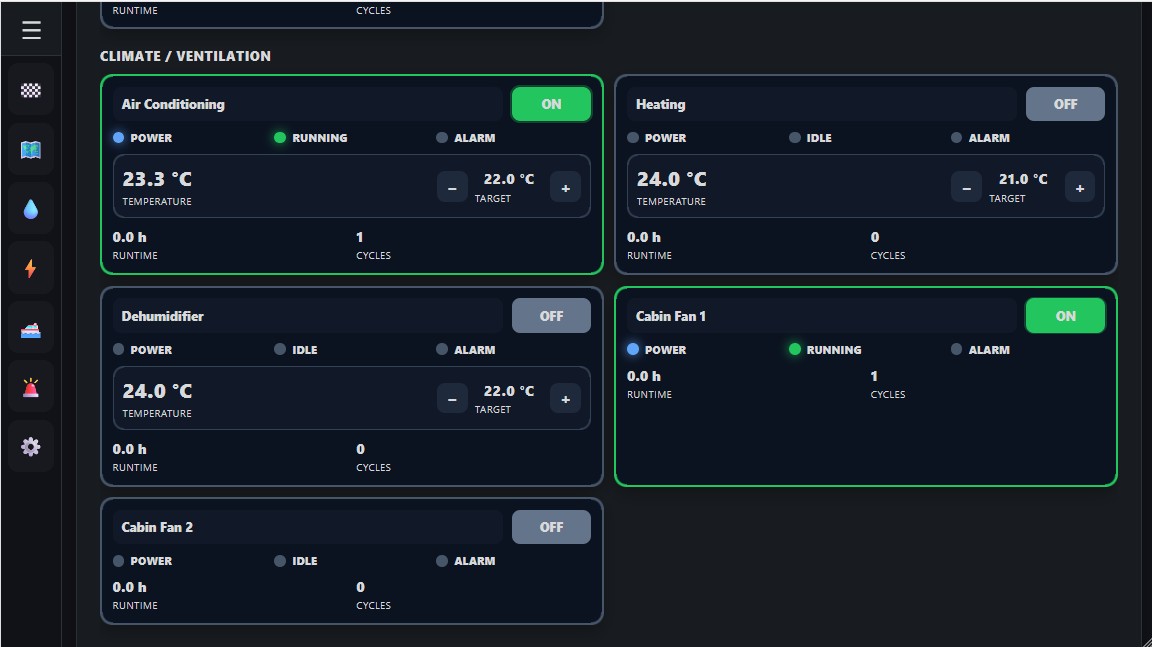
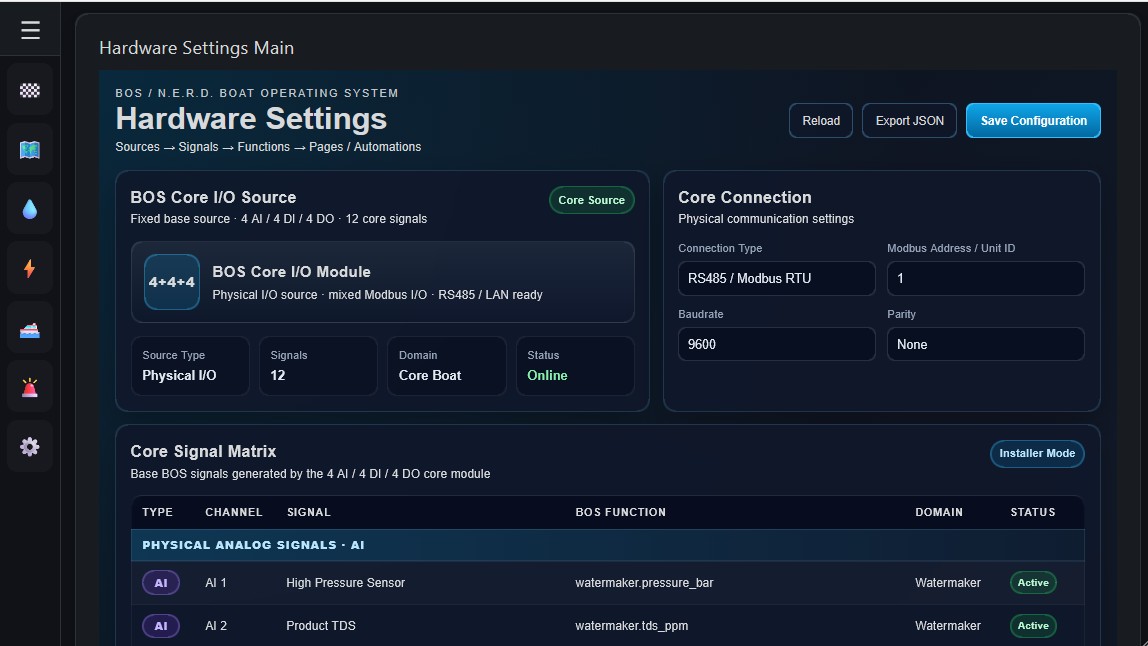
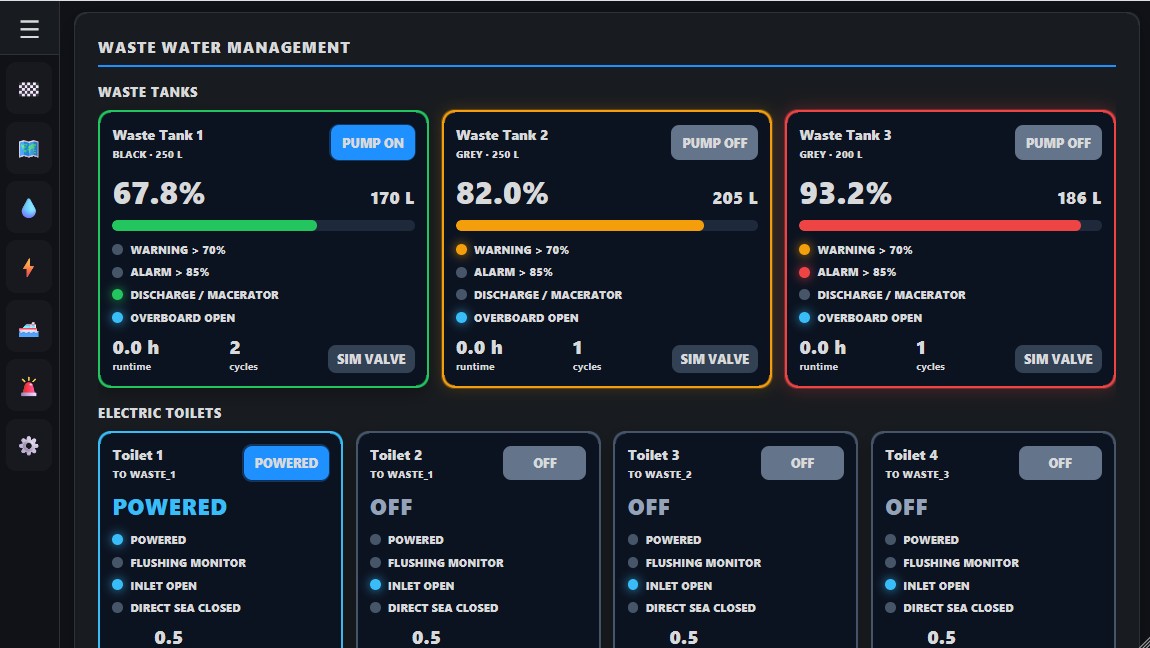
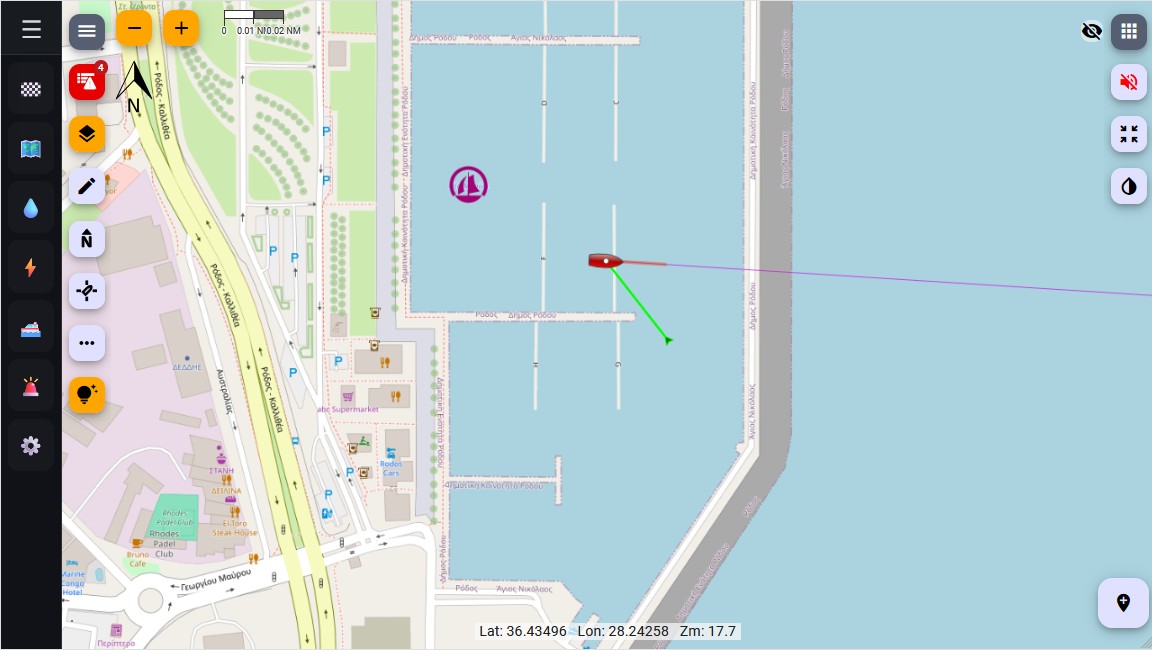
B.O.S. is CobrAm’s modular onboard monitoring and control platform. It brings navigation data, electrical systems, watermakers, tanks, sensors, alarms and remote diagnostics together in one practical marine environment.
Modern boats contain an increasing number of independent systems. Navigation instruments, batteries, solar chargers, watermakers, pumps, tanks and alarms often use separate displays, proprietary applications and incompatible communication protocols.
B.O.S. is designed to connect these systems without replacing equipment that already works. It collects information from different sources, organises it and presents it through a clear, unified interface that can be adapted to the vessel and its owner.
B.O.S. creates a central point from which the crew can monitor the condition of the boat and, where appropriate, control connected equipment.
The platform can display and manage information such as:
Each installation can be configured around the systems that actually exist onboard. A small sailing yacht may require only energy, tanks and navigation data, while a larger vessel may include several machinery spaces, multiple battery banks, watermakers, generators and distributed sensors.
B.O.S. is built as a collection of independent modules rather than one monolithic application. Each function can be installed, configured and upgraded separately.
This modular structure makes it possible to:
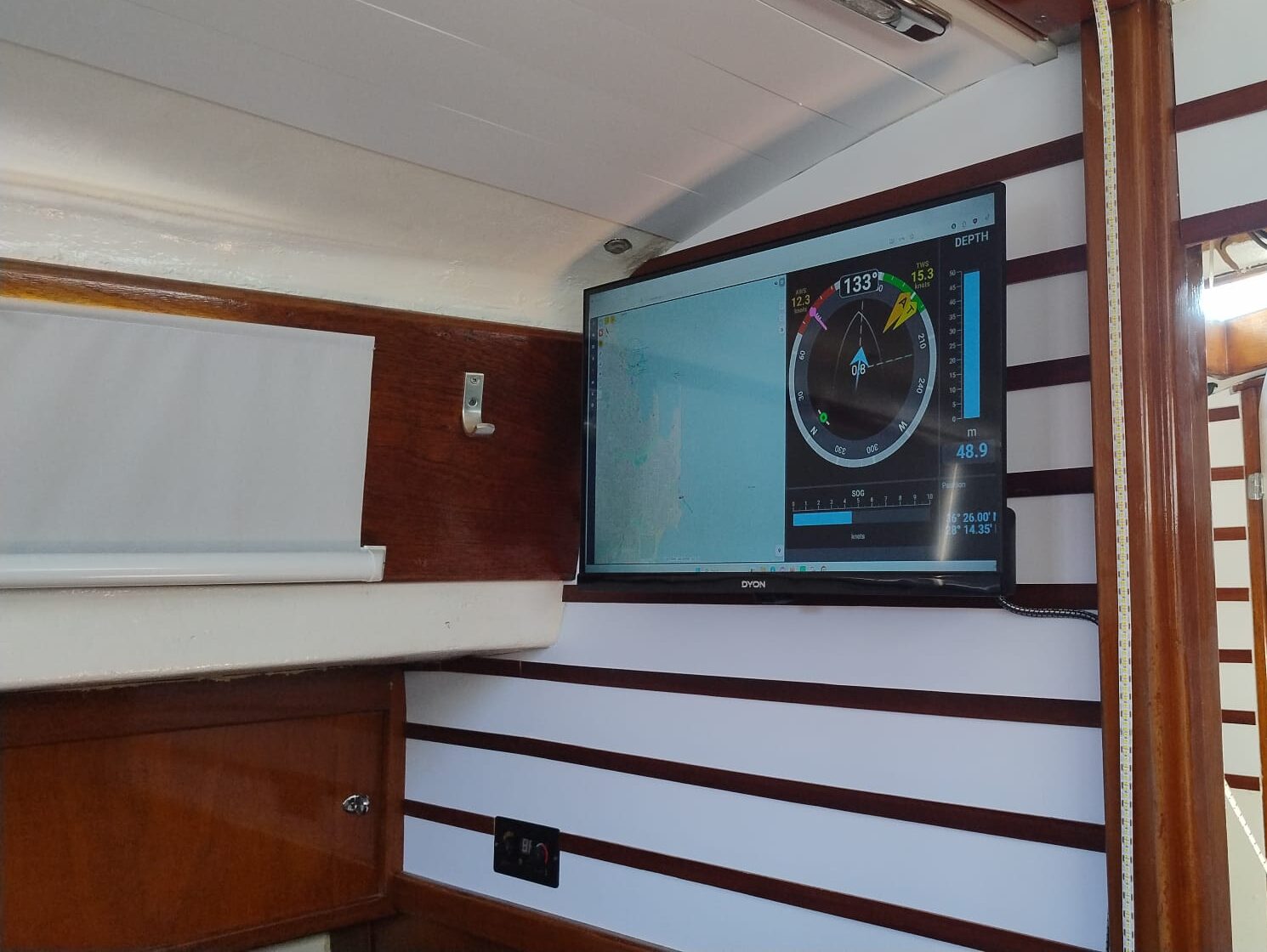
The central B.O.S. computer is normally a compact, low-power Linux device such as a Raspberry Pi. It runs continuously onboard and communicates with sensors, instruments and controllers throughout the vessel.
A Raspberry Pi or comparable industrial single-board computer provides:
The system can run from solid-state storage and be backed up as a complete, reproducible configuration.
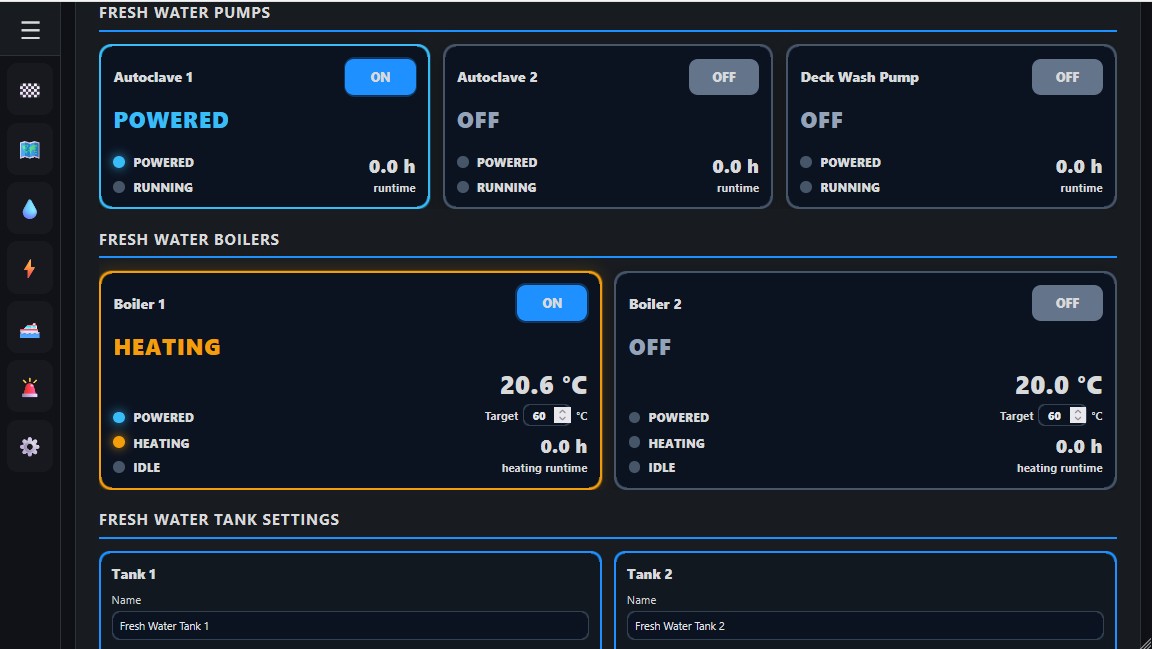
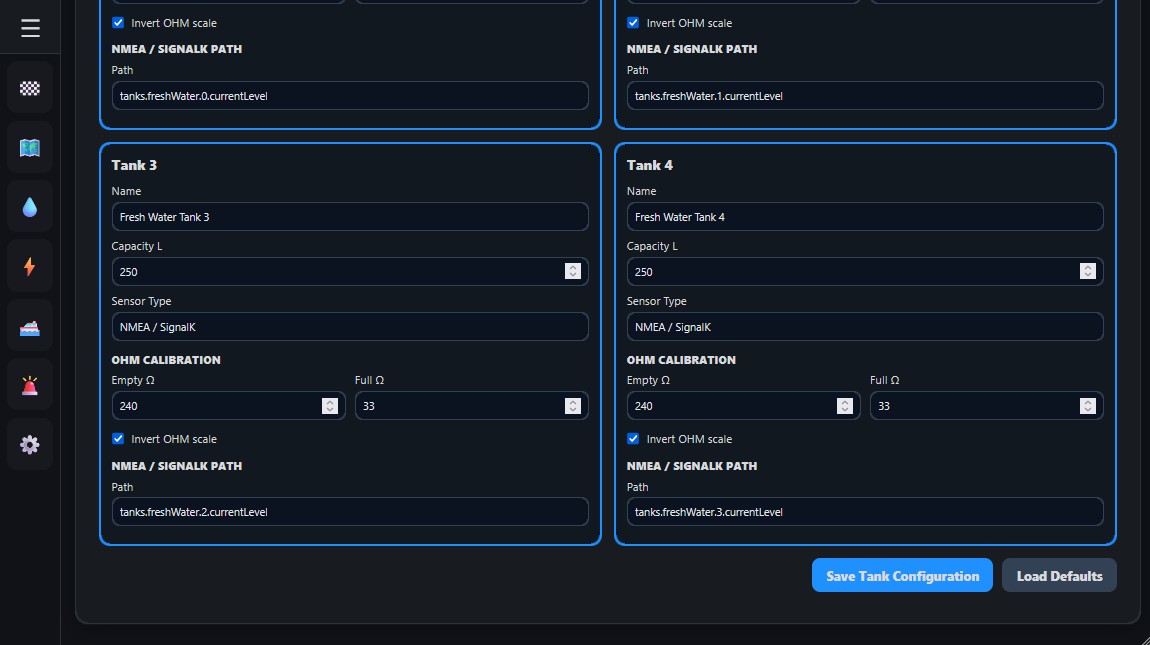
B.O.S. can be operated from a fixed onboard touchscreen. The interface is designed primarily for a wide landscape marine display, with large controls, clear status indicators and pages organised around practical onboard functions.
The dashboard may also be opened from:
B.O.S. can receive data from distributed input and output modules connected by robust marine-friendly communication links.
Typical connections include:
RS485 and Modbus RTU are particularly useful aboard a vessel because they allow multiple devices to share a reliable two-wire communication bus over long cable runs.
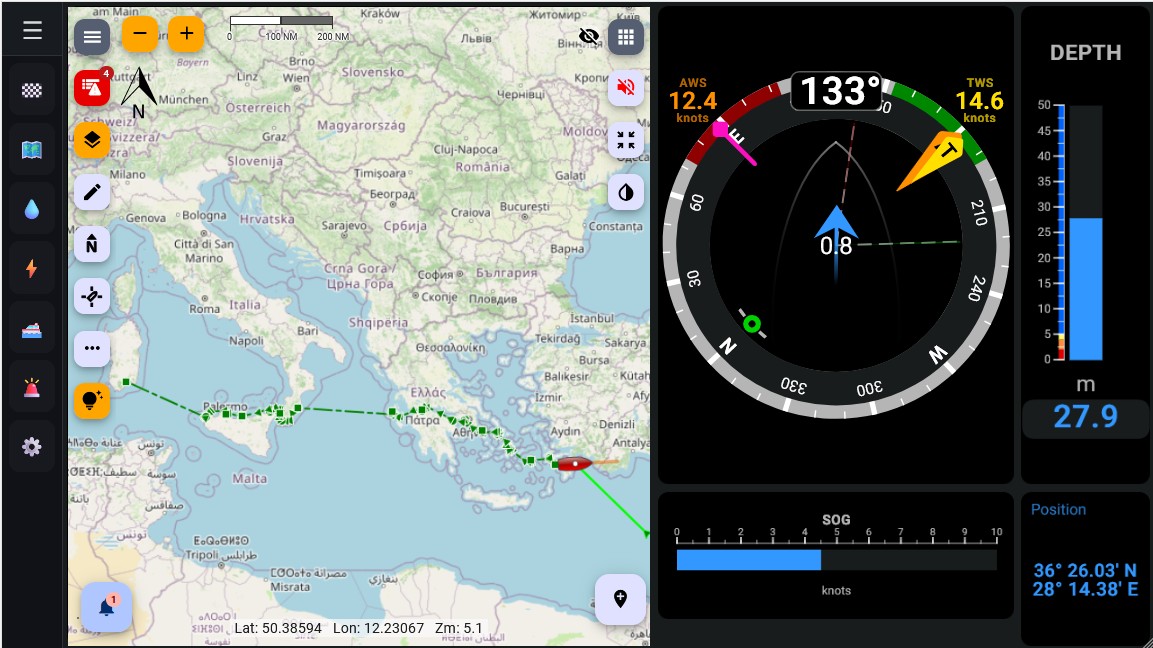
B.O.S. can receive navigation and vessel data through standard marine communication systems.
Depending on the installation, this may include:
Typical navigation data includes:
B.O.S. does not attempt to replace certified navigation instruments. Instead, it provides an additional integrated view and makes navigation data available to dashboards, logging systems and automation logic.
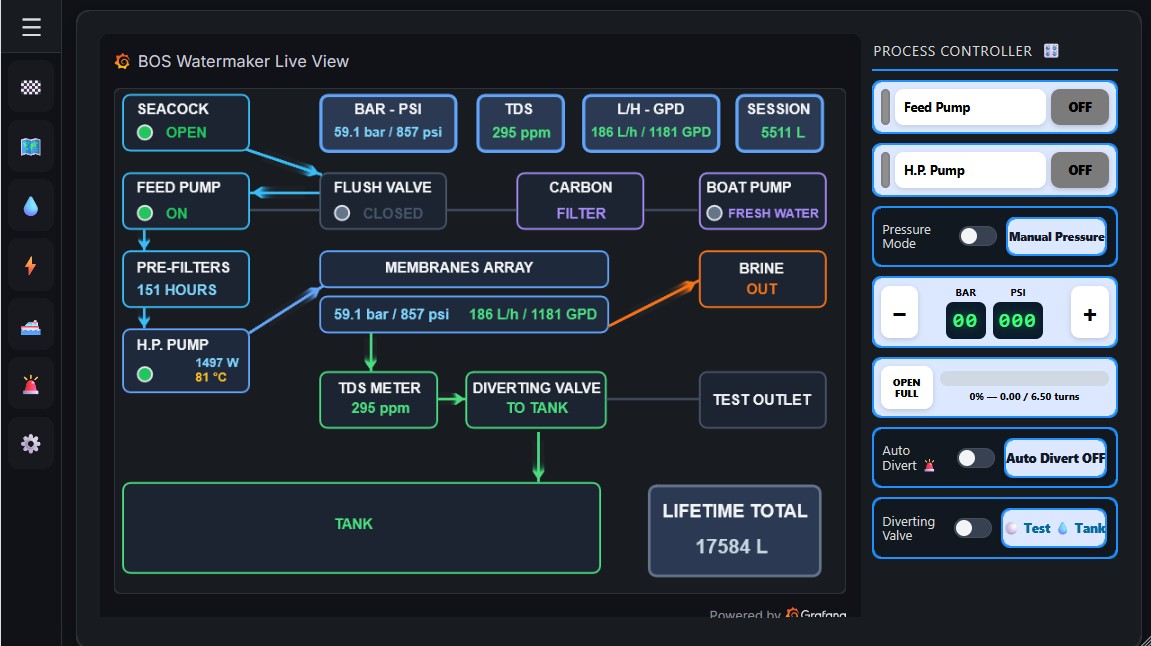
Watermakers are one of the first major systems being integrated into the B.O.S. environment.
B.O.S. can receive and display:
Where a compatible controller is installed, B.O.S. may also supervise commands such as starting, stopping, flushing and diverting product water.
B.O.S. is built using established open-source software rather than one proprietary application. Each component performs a specific task and can be maintained or replaced independently.
Node-RED manages data flow, automation and system logic. It connects sensors, protocols, databases, dashboards and control commands through visual flows that are easy to inspect and modify.
It can be used for:
Signal K provides a modern open data format for marine information. It collects navigation and vessel data and makes it available to dashboards, applications and other onboard services.
InfluxDB stores time-series information such as battery current, solar production, tank levels, watermaker output and temperatures.
This allows the crew to see not only the current value, but also what happened during the previous hours, days or months.
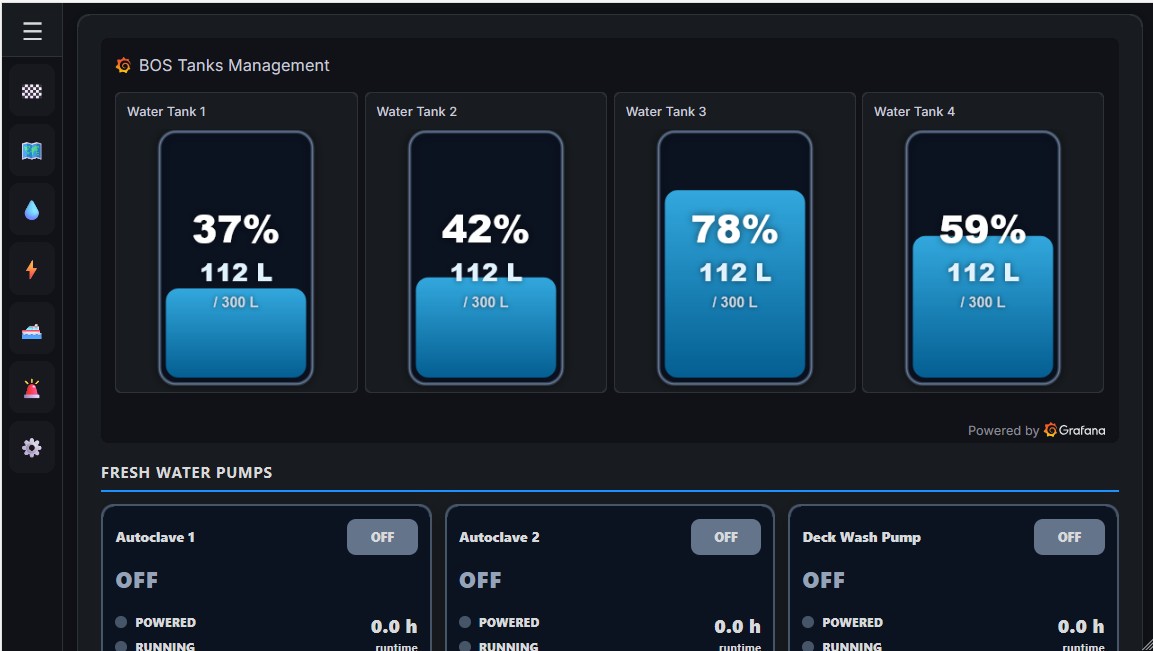
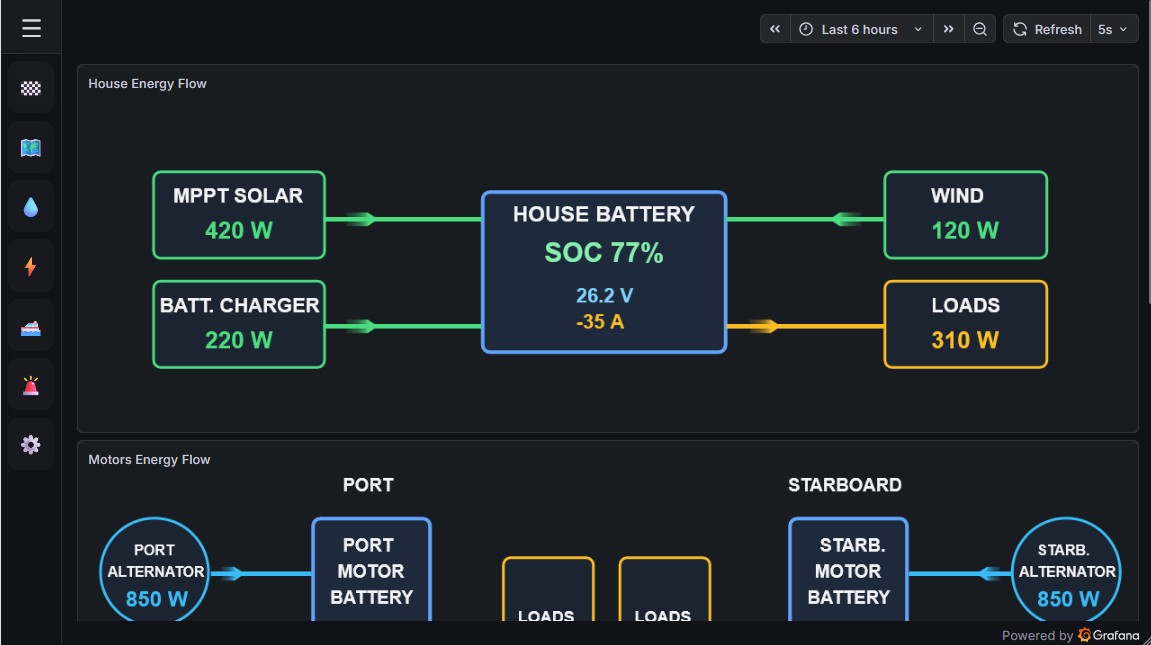
Grafana converts stored data into historical charts, gauges and analytical dashboards.
Examples include:
MQTT provides a lightweight messaging system between onboard devices and services. Sensors and controllers can publish their data, while dashboards and automation systems subscribe to the information they require.
The main software services can run in separate Docker containers. This keeps the system organised, simplifies updates and makes the complete environment easier to reproduce on replacement hardware.
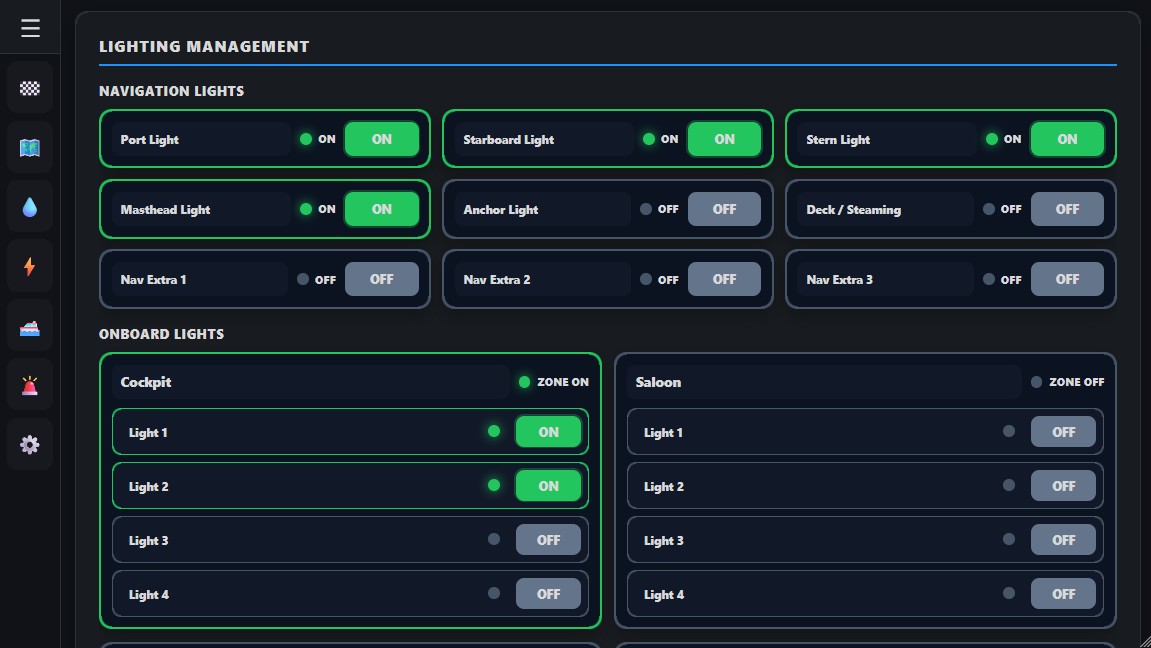
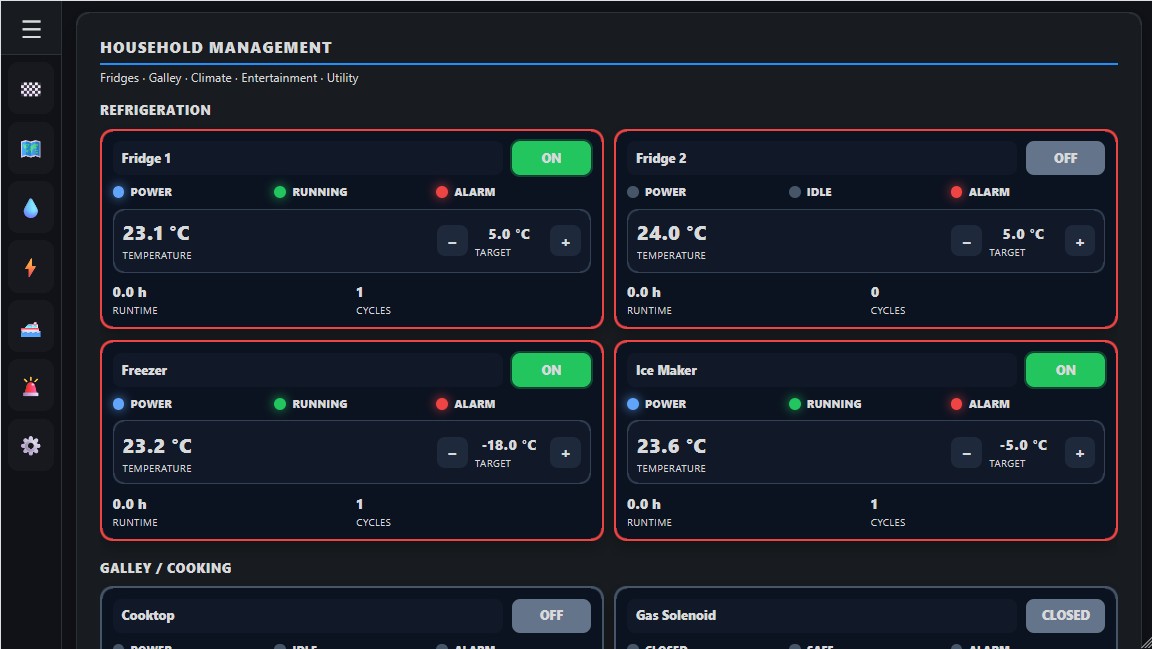
The B.O.S. interface is organised into practical sections rather than around individual equipment manufacturers.
Possible dashboard areas include:
The interface can be adapted to each boat, hiding functions that are not required and giving priority to the information the crew actually uses.
B.O.S. is intended to make faults easier to identify before they become serious.
Instead of showing only a generic warning, the system can combine several related measurements.
For example:
Historical data also helps distinguish a real fault from a temporary condition and gives technicians useful information before they begin troubleshooting.
When an internet connection is available, B.O.S. can be accessed securely from outside the boat.
This can make it possible to:
Secure private networking solutions such as Tailscale can provide remote access without exposing sensitive onboard services directly to the public internet.
B.O.S. is designed around a local-first philosophy.
The onboard system should continue to operate when:
Remote servers may be used for development, backups, demonstrations or optional external access, but the essential onboard functions remain local to the vessel.
B.O.S. is being developed as an open and reconstructable system.
The objective is to avoid a situation where the boat depends permanently on:
Source code, configuration files, dashboard definitions and installation documentation can be version-controlled and backed up. If hardware fails, the system can be rebuilt on a replacement computer rather than recreated from memory.
B.O.S. is intended to remain accessible to technically minded boat owners while also supporting professional, repeatable installations.
A DIY builder can begin with:
A professional installation can extend the same architecture with:
The principles remain the same: standard protocols, clear documentation, modular components and local control.
B.O.S. is not intended to replace every specialised marine device aboard the vessel.
It is not:
Its role is to connect, organise and clarify the information already present onboard while adding intelligent monitoring and carefully designed control where it provides a real benefit.
B.O.S. is CobrAm’s long-term project for a more transparent, maintainable and intelligent onboard environment.
The goal is not to add electronics merely for the sake of technology. The goal is to make the boat easier to understand.
A well-designed B.O.S. installation should help the owner answer practical questions immediately: